A Living History
From Saint Louis Bay to Cultural Powerhouse
The name traces to Saint Louis Bay — an arm of Lake Minnetonka that early surveyors noted on their maps — filtered through the romanticism of French exploration and Catholic mission naming conventions. When the township was organized in 1886, the name "St. Louis Park" stuck, though the bay itself was miles away. The original settlers were primarily Scandinavian and German farming families who found the flat, well-drained land ideal for truck farming — supplying fresh vegetables to the rapidly growing Minneapolis market just miles to the east.
The city's trajectory changed in the early 20th century with the arrival of two forces that would define it: streetcar lines and Jewish immigration. As Eastern European Jewish families fled the overcrowded north Minneapolis neighborhoods where they had first settled, they discovered that St. Louis Park's western Minneapolis border offered affordable lots, good schools, and enough distance from the city's social pressures to build something genuinely their own. By the 1940s and 50s, St. Louis Park had become the center of Jewish life in the Twin Cities — a community that would punch far above its population in cultural and political influence for generations.
The city incorporated in 1954 and grew rapidly through the postwar boom. Its most famous cultural export is the Coen Brothers — Joel and Ethan, raised on Joppa Avenue — whose films carry the dark, wry sensibility of a Minnesota Jewish childhood into global cinema. Senator Al Franken, humorist and political figure, is another St. Louis Park native who shaped the city's reputation as a place that produces outsized personalities with outsized ambitions.
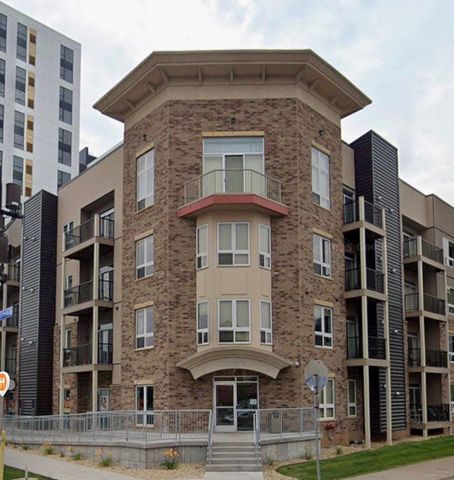
In the 21st century, St. Louis Park has reinvented itself as the metro's most progressive and design-forward first-ring suburb. The arrival of the METRO Green Line Extension (light rail) has catalyzed dense, transit-oriented development along the Wooddale and Louisiana station corridors — bringing new apartments, restaurants, and a walkable energy that makes St. Louis Park feel increasingly like an extension of the Uptown neighborhood it borders.
1886 — Township organized; Scandinavian and German truck farmers supply the Minneapolis market.
1920s–40s — Jewish families relocate from north Minneapolis; St. Louis Park becomes the heart of Twin Cities Jewish community life.
1954 — City incorporates; rapid postwar residential growth fills in the suburban grid.
1970s — The Coen Brothers grow up on Joppa Avenue — absorbing the city's sensibility before exporting it to world cinema.
2015 — City adopts bold climate and housing policy; transit-oriented development begins reshaping key corridors.
2023–24 — METRO Green Line Extension opens — light rail connects St. Louis Park directly to Minneapolis and the airport.
Community Character
The Metro's Most Vibrant Inner Suburb
St. Louis Park today is a city that genuinely surprises first-time visitors. The Excelsior Boulevard corridor — stretching from the Minneapolis border through the city's commercial heart — offers a restaurant scene, coffee shop density, and independent retail concentration that rivals urban neighborhoods. Knollwood Mall anchors more traditional retail, while the evolving Wooddale station area is becoming one of the metro's most interesting transit-oriented neighborhoods. The city's park system, anchored by Wolfe Park and Westwood Hills Nature Center, provides remarkable natural immersion within minutes of the urban grid.
St. Louis Park is served by its own excellent independent St. Louis Park Public Schools (ISD 283), consistently ranked among the top urban-adjacent districts in Minnesota, with a commitment to equity and academic achievement that draws families specifically for the school system. Housing stock ranges from modest 1950s ramblers to significant mid-century modern homes and new construction along the light rail corridors — a mix that offers something for nearly every buyer profile and budget.
Transit — METRO Green Line Light Rail
Culture — Birthplace of the Coen Brothers
Schools — ISD 283 — top-rated independent district
Dining — Excelsior Blvd restaurant corridor
2026 Market Snapshot
St. Louis Park Real Estate
St. Louis Park is one of the hottest markets in the western suburbs — a 100.1% list-to-sale ratio tells you buyers are bidding above ask with regularity. The light rail effect is real: proximity to Green Line stations commands a measurable premium, and the neighborhoods along Excelsior Boulevard and near the Wooddale corridor are seeing the sharpest appreciation. Buyers need to move quickly; homes priced correctly are gone in days.
Who's buying: Minneapolis urbanites who want a single-family home but refuse to sacrifice walkability or transit access. Young Jewish families drawn by community and excellent schools. Design professionals and creative-class buyers drawn to mid-century modern homes. Buyers who've been outbid in Uptown or Linden Hills and discovered that SLP offers equivalent lifestyle at a meaningful discount.
Typical Buyer Profile
Age 30–46 · Household income $120K–$200K · Often first or second-time buyer · Prioritizes walkability, ISD 283 schools, and Minneapolis adjacency · Frequently competing with multiple offers
Quick facts — More in this region