A Living History
The Lake, the Legend, and the Resort Era
White Bear Lake takes its name from a legend the Dakota and Ojibwe carried long before settlers arrived — a tale of a great white bear and a warrior's stand on Manitou Island, the wooded island that still sits at the lake's heart. The story was famous enough that Mark Twain retold a version of it in Life on the Mississippi (1883), and the name attached itself permanently to both the 2,400-acre lake and the town that grew on its southwestern shore.
The town's defining era began with the railroad. When the Lake Superior & Mississippi Railroad reached the lake on September 10, 1868, it cut the journey from St. Paul from a three-hour buggy ride to roughly twenty minutes — and a resort boom ignited almost overnight. Grand pavilions, hotels, and dancing halls lined the water, and by the 1880s travel writers were calling White Bear Lake one of the great summer destinations of the upper Midwest. Twain put it most memorably, declaring it not a resort but the resort of the Twin Cities.
The lake's glamour drew more than day-trippers. The White Bear Yacht Club, founded in 1889, became a fixture of St. Paul society, and in the summers of 1921 and 1922 a young F. Scott Fitzgerald stayed at the lake and wrote the short story "Winter Dreams" — which he later described to his editor as "a sort of first draft of the Gatsby idea." The Fitzgeralds were reportedly asked to leave the club for making "such an unholy rumpus day and night," a story locals still tell with affection.
White Bear Lake incorporated as a village on February 18, 1881 and as a city in 1921. Its population roughly quadrupled through the postwar suburban boom — from about 2,900 in 1940 to over 23,000 by 1970 — filling in the ramblers and split-levels that still define much of its housing. Today it is a fully built-out community of roughly 24,000 residents, fiercely proud of its lake, its legends, and a downtown that has never lost its small-city soul.
Pre-1850 — Dakota and Ojibwe peoples know the lake through the legend of the great white bear and Manitou Island — the source of its name.
1868 — The railroad reaches the lake on September 10; a three-hour buggy ride becomes a 20-minute trip and the resort boom begins.
1881 — White Bear Lake incorporates as a village; grand hotels and pavilions line the shore at the height of the resort era.
1883 — Mark Twain, in Life on the Mississippi, calls White Bear Lake "the resort" of the Twin Cities.
1922 — F. Scott Fitzgerald summers at the lake and writes "Winter Dreams" — "a sort of first draft of the Gatsby idea."
Today — A built-out city of ~24,000 with a walkable historic downtown, Manitou Days, and one of the metro's most beloved lakes.
Community Character
A Lake Town With a Real Main Street
White Bear Lake is one of the rare metro suburbs with a genuine, walkable historic downtown — blocks of locally owned boutiques, restaurants, and taverns radiating from the old depot, anchored by institutions like Washington Square. Every June the city throws Manitou Days — a multi-week festival begun in 1967 ("Manitou" means spirit in the Dakota language) with a grande parade, medallion hunt, Marketfest, and a Fourth of July fireworks finale over Memorial Beach.
The lake itself is the city's defining amenity: 2,416 acres shared with Washington County, with public access at Memorial Beach, Matoska Park, and the county beach and boat launch on Lake Avenue. Schools are served by White Bear Lake Area Schools (ISD 624), which in 2019 passed the largest school bond in Minnesota history — $326 million — to unify its high school onto a single expanded campus that opened in 2024. Century College, one of the state's largest two-year colleges, and manufacturer Wilson Tool anchor the local employment base. For buyers, White Bear Lake offers a lake-town lifestyle and an authentic downtown at a price that runs meaningfully below the metro median.
The Lake — 2,400+ acres with public beaches
Downtown — Walkable historic Main Street district
Heritage — Minnesota's first resort town
Schools — ISD 624 — record $326M campus bond
2026 Market Snapshot
White Bear Lake Real Estate
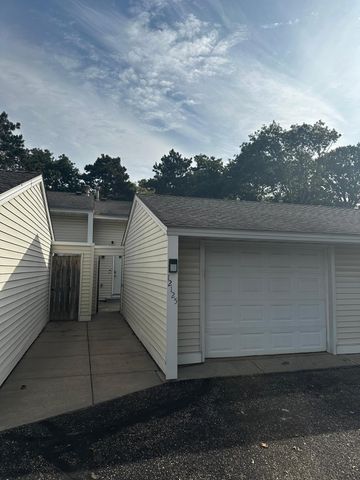
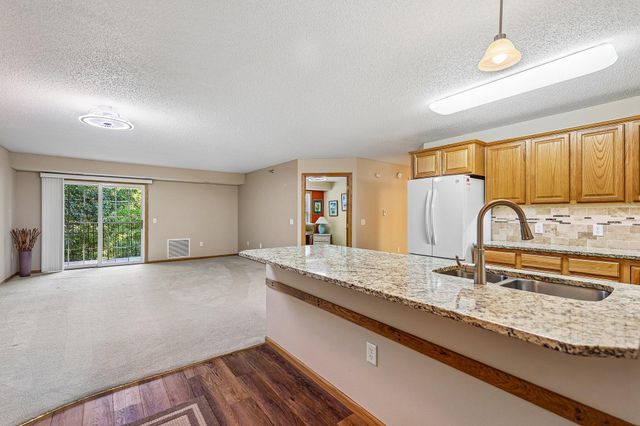
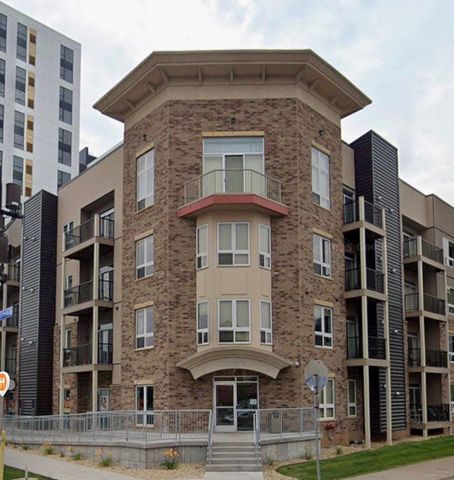
White Bear Lake offers something genuinely scarce: a lake-town lifestyle with a real downtown, at a median price below the Twin Cities metro figure. Homes are moving in roughly three weeks at close to full asking, and Redfin rates the market very competitive. The midcentury rambler and split-level stock in the $300K–$425K range sees the most activity, while lakefront and historic homes near downtown trade as a separate premium tier.
Who's buying: Move-up families drawn by the lake, the downtown, and ISD 624's investment in its schools. First-time buyers priced out of pricier east-metro suburbs who find White Bear Lake's midcentury homes an accessible entry point. Buyers specifically chasing lake access or a walkable Main Street neighborhood rather than a subdivision.
Typical Buyer Profile
Age 30–50 · Household income $100K–$180K · Often move-up or second-time buyer · Values lake access, a walkable downtown, and ISD 624 schools · Frequently comparing White Bear Lake to Mahtomedi or Vadnais Heights
Quick facts — More in this region